
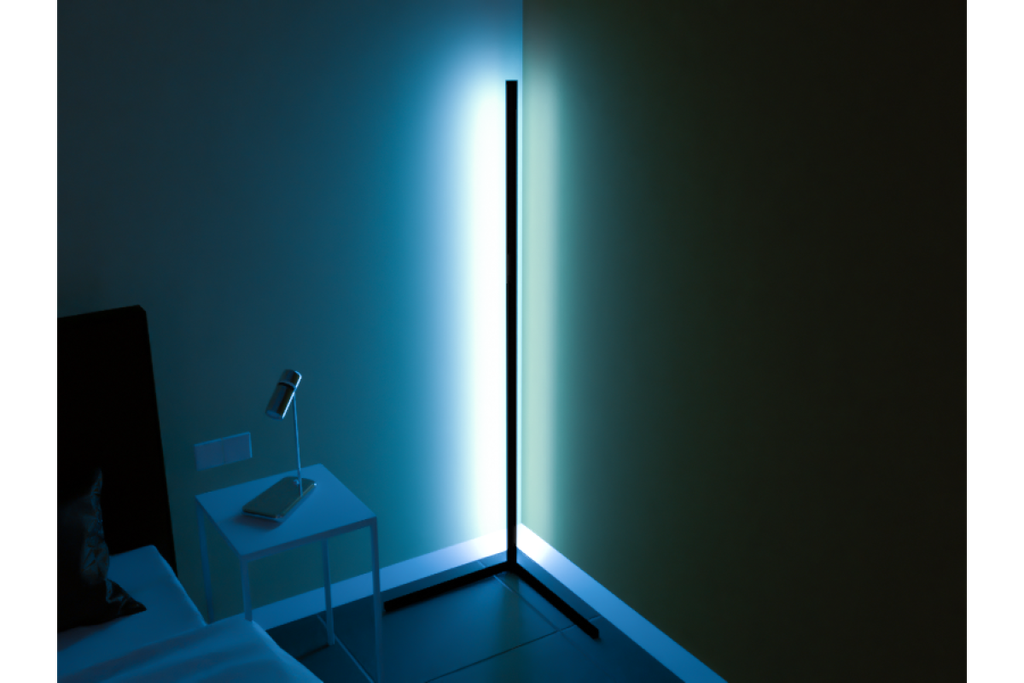
A living room often needs more than one kind of illumination. It is used for conversation, reading, screen viewing, entertaining visitors and moving through the house at night. Ceiling lights can provide a strong general layer, but an LED floor lamp changes the balance of a room without altering the ceiling or opening the walls. Its position can strengthen an armchair corner, give a sofa a softer background or create an inviting pool of light beside a bookshelf. The key is to use the floor luminaire as part of the room’s layout rather than placing it in an empty corner by default.
Establish what the lamp should do
A floor lamp for reading has a different purpose from one intended to brighten a dark wall. The reader needs light on the book or magazine; ambient lighting should distribute brightness more widely and avoid a harsh direct source. A decorative fitting may emphasize its silhouette while contributing only a limited amount of useful task light. Naming the purpose first prevents disappointment after the furniture is arranged.
Check whether the luminaire directs light upward, downward or sideways. An uplight can make a low room feel more open by brightening the ceiling, while a downward or adjustable head serves a chair more directly. The finish of nearby walls and the height of the ceiling influence how effective any reflected component becomes.
Build a reading corner around the seated person
Place the chair in its intended location and have someone sit with a book. Note where the hands, page and head are positioned. The lamp should light the reading surface without placing a bright source directly in the line of sight. A source slightly behind or beside the shoulder often provides a workable angle, depending on its beam and the chair’s backrest.
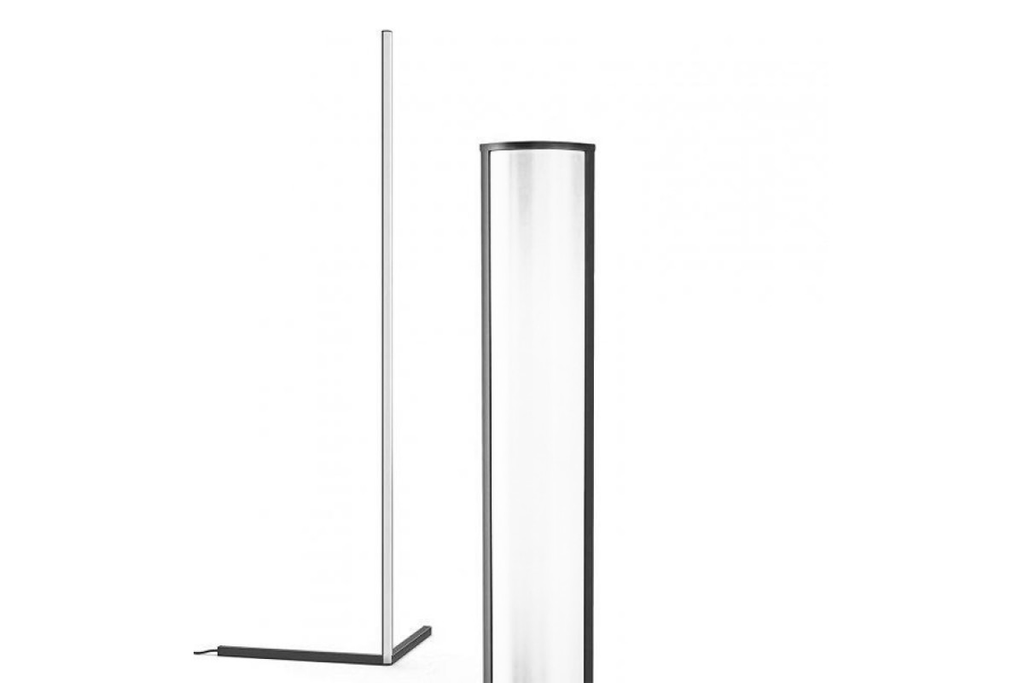
When browsing Floor Luminaires, compare the actual dimensions, base footprint, luminous direction and available control methods of specific products. Different floor fixtures may be designed for broad decorative output or local illumination. A tall body alone does not indicate that the light reaches a seated reader. Test the arrangement with the book held at its normal angle.
Use reflected light to soften the room
A floor lamp aimed toward a pale wall or ceiling turns that surface into a secondary light source. Reflected illumination can make the room feel more open and avoids the sharp highlights of an exposed emitter. The effect is strongest when the reflecting surface is sufficiently bright and free from deep recesses that interrupt the spread. Very dark paint will absorb more light and produce a more localized result.
Move the fitting farther from or closer to the wall to see how the illuminated area changes. Avoid pointing strong light directly at framed pictures with reflective glazing unless the display is meant to catch highlights. A soft background layer is particularly useful when people watch television, because it provides orientation without flooding the screen area with direct light.
Think about furniture circulation and stability
A floor fitting occupies real space, even when its stem looks slender. Check the base diameter, the path of a reclining chair, the swing of a cabinet door and walking routes between furniture. In a small living room, a large arc-style fitting can extend into areas that are frequently crossed. The visual reach and physical reach of the lamp need separate consideration.
Use the assembly and stability instructions supplied with the exact luminaire, especially in homes with children or pets. The power cable should follow a protected route to a socket rather than crossing a passage under a loose rug. Do not conceal electrical leads in locations where furniture legs or doors can damage them. Safety and ease of cleaning are part of the placement decision.
Make the lamp work with existing ceiling lighting
A floor lamp can reduce reliance on ceiling fixtures during quiet evenings. This works best when the two systems have distinct functions and separate switching. For instance, ceiling lighting may serve cleaning and general activities while the floor fixture supports reading or conversation. Dimming can help bridge the gap, provided the luminaire and its control equipment are designed to operate together.
Compare colour appearance across the room. A floor fixture with noticeably cool light beside warm ceiling luminaires can look disconnected, especially when they illuminate the same wall. Matching colour temperature closely is often a straightforward solution; deliberate contrast should have a clear purpose. Test the combination with curtains open and closed because ambient daylight affects perception.
Scale the luminaire to the objects around it
A compact armchair and a deep sectional sofa create different visual settings. A tiny lamp beside a large sofa may fail to provide the desired visual balance, while an oversized decorative fitting can dominate a narrow reading corner. Review the lamp’s height against adjacent furniture and the ceiling. A simple elevation sketch often explains the proportions better than a plan view alone.
Material finish also affects prominence. A matte black stem against a dark wall can disappear during the day, while a polished metal surface reflects window light and attracts attention. The shade or luminous body becomes another visual element when switched on. Choose a form that suits both states, since a floor lamp is part of the interior throughout the day.
Decide where people will operate it
An effective floor lamp should be controllable from the point where it is used. A reader should not need to stand up repeatedly to change brightness or switch it off. Check whether the control is on the body, cable, wall switch or compatible remote system. A shared living room may benefit from an easy way to operate the lamp independently of the main ceiling circuit.
Plan nearby sockets before final furniture placement. If no suitable outlet exists, a properly installed electrical point can be cleaner and safer than a long exposed extension lead. Leave enough slack to reposition the lamp slightly for cleaning, but prevent loops of cable from entering the walking area. Small usability decisions become noticeable after the first few evenings.
Review the space from more than one seat
One arrangement can look comfortable from the armchair and distracting from the sofa opposite it. Sit in the positions people regularly use and check the visible emitter, wall reflections and shadows. Try the lamp with the ceiling light on, dimmed and off. A furniture layout that works in daylight can behave quite differently after dark.
The strongest floor-lamp arrangements serve a specific activity while improving the room as a whole. Light reaches the book or surrounding wall, the fitting respects circulation and the control remains convenient. That combination gives the living room distinct zones without relying on a completely new fixed lighting installation.


More Stories
Commercial plumbing services and what to expect from commercial plumbing contractors in Denver
Best Tools for Shopping Cart Handle Repair at Home
Renovation Costs vs. ROI: Get the Best Bang for Your Buck